
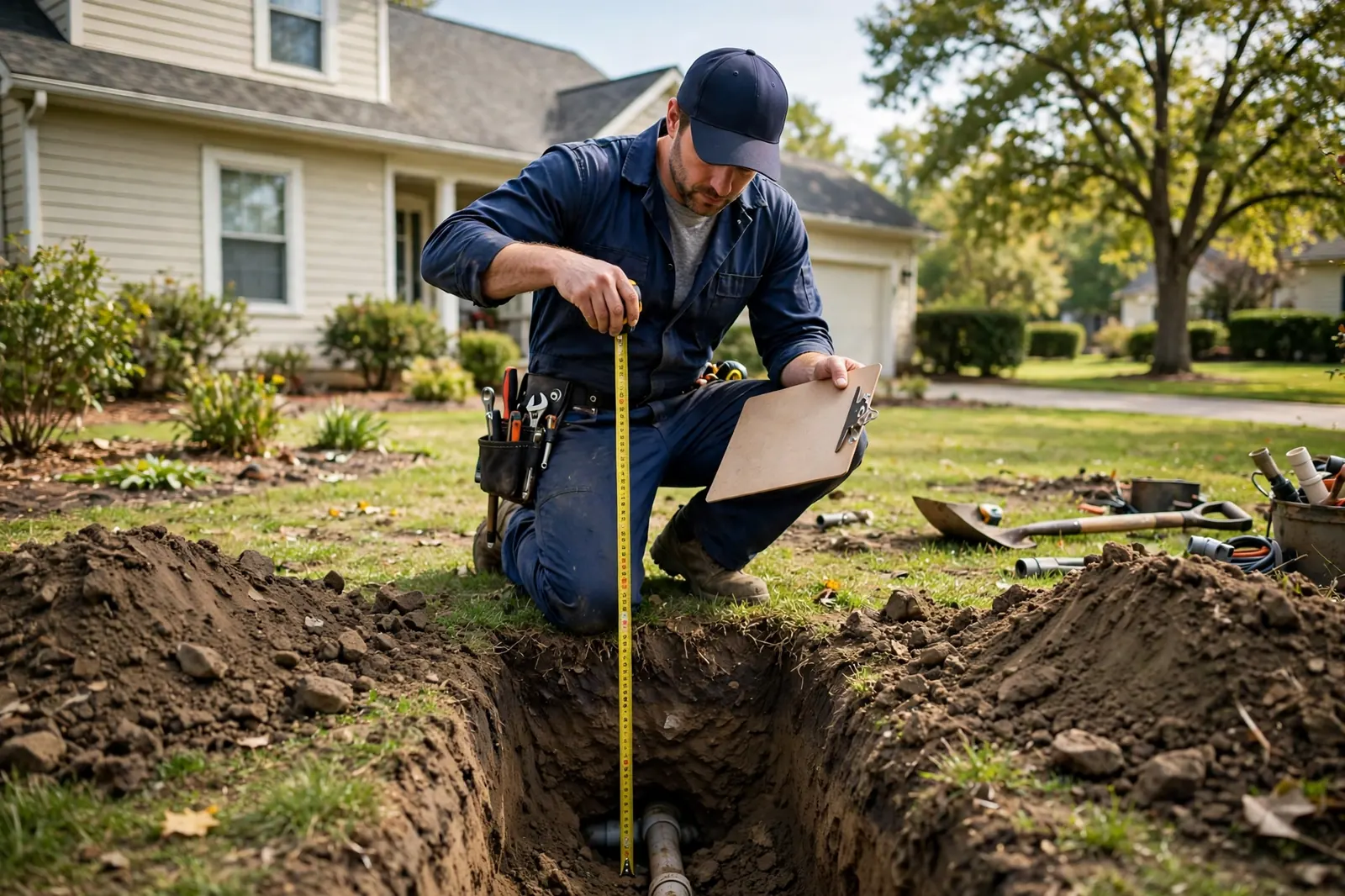
There is no fixed price for a water service line leak repair, because no two lines are the same. A shallow line under open lawn is a small job. A deep line under a driveway, in clay soil, with a corroded pipe, is a bigger one. This guide explains the six factors that decide what a repair costs in Lancaster — depth and length, soil, access, the condition of the pipe, materials, and what detection saves — so you know what your provider is looking at when the price is discussed.
Depth and length of the line
Depth is the first factor. A service line buried a few feet down is quick to reach; a deep line takes longer to open, needs more shoring, and takes longer to backfill. The depth of a line depends on when it was laid and how deep the frost line sits in Lancaster — and older lines are often deeper than newer ones, because they were laid to a different standard.
Length is the second. A short run from the street to the house is a small job. A long run across a large lot — common on the South End, where homes sit on bigger parcels — means more pipe, more digging, and more time. Length and depth together set the size of the job before anything else is considered.
Soil and ground conditions
Central Ohio clay is the soil most Lancaster lines sit in, and it is harder work than soft loam. Clay is heavy, it sticks to tools, and it swells when wet and shrinks when dry — which is also why it stresses buried pipe in the first place. Rocky ground is harder still, and a line laid through rock takes longer to open than one in open soil.
Freeze-thaw adds a seasonal factor. Ground frozen in winter is harder to open than ground in summer, and a repair done in frozen ground takes longer. The season does not change the pipe, but it changes the digging, and the digging is a large part of the work.
Access: lawn, driveway, or slab
Access is often the largest single factor. A line under open lawn is the easiest to reach: the ground is opened, the pipe is repaired, and the trench is backfilled. A line under a driveway, a sidewalk, or a patio is harder — the surface has to be cut or lifted, the work is slower, and the surface has to be put back afterwards.
A line under a slab or a building is harder still, and access may decide the method entirely. Your provider will explain the access for your line after the first look, because it is the factor most likely to surprise a homeowner — and the one most worth knowing before the work is agreed.
The condition of the existing pipe
The condition of the pipe decides whether the job is a repair or a replacement, and that is the largest cost difference in this work. A spot repair of one damaged section is a small job. A full replacement — a new line from the street connection to the house — is a bigger one, with more pipe, more digging, and more time.
The condition is not known until the line is located and assessed. A line that has leaked once, in one section, is usually a repair. A line that has leaked more than once, or has corroded through its length, or is made of lead, is usually a replacement. The assessment is what turns a guess into a plan.
Materials: copper or PEX
The material used for the repair or replacement is a cost factor, and the choice is between modern copper and PEX. Copper is rigid and long-proven; PEX is flexible, resists scale and corrosion, and bends around obstacles without joints. The material affects the cost of the pipe itself and the time it takes to install.
The choice is not only about price. Soil, the length of the run, and the existing setup all matter, and the provider will recommend the material that fits your property. Either material, installed well, will outlast the line it replaces.
What detection saves
Detection is the factor that makes every other factor smaller. A leak located by acoustic listening, pressure testing, and a meter check is repaired in one marked section — one trench, one length of pipe, one backfill. A leak found by digging is a trench across the yard, with more ground opened, more pipe exposed, and more surface to put back.
The saving is not only in the digging. A located repair is a known job, and a known job can be priced on its factors before the work is agreed. A guessed repair cannot. Detection is the step that turns a water line leak from an open-ended problem into a defined job — and a defined job is the one you can plan for.
Getting a clear picture before work starts
The way to a clear price is a clear assessment. The provider locates the leak, checks the condition of the line, and looks at the depth, the soil, and the access — and then explains the cost factors for your property: what the job involves, what could change it, and what the options are. A spot repair and a full replacement are different jobs, and the assessment is what tells them apart.
Ask questions before the work is agreed. What is the condition of the rest of the line? What is the access like? What material will be used, and why? What happens if the pipe is worse than expected once it is exposed? A provider who has located the leak can answer all of those, and the answers are what turn a set of cost factors into a plan you can agree to.
Related services and areas
Related services: Water Service Line Leak Repair, Water Service Line Leak Detection. This guide applies across Lancaster, including South End and all Lancaster neighbourhoods. Also read the blog index for more guides.
Questions, answered
Why is there no fixed price on this site?
Every line differs — in depth, length, soil, access, and condition — and the cost follows those factors rather than a menu. A fixed price would be a guess, and a guess is not useful. Your provider explains the cost factors for your property after the line is located.
Can I get a price before the work starts?
Yes. After the line is located and assessed, your provider will explain the cost factors for your property and the options — a spot repair or a replacement — before any work is agreed.
Does a longer line always cost more?
Generally, yes. A longer line means more pipe, more digging, and more time, and a deeper line adds to the same total. Length and depth are the two factors that set the size of the job.
Is detection part of the repair cost?
Ask your provider how detection and repair are quoted for your job. The assessment and the cost factors are explained before any work is agreed, so you know what is included and what the options are.